

From one principle to a growing group of businesses.
It started with a simple idea: see the person, not the credit score.
The Salad Group was founded to challenge a problem that still sits at the heart of financial exclusion in the UK; people who can afford to repay being denied access to fair credit because their credit history doesn't tell their whole story.
From one lending business, Salad Finance, that idea has grown into the Salad Group where we bring together responsible lending, Open Banking technology and new products designed to create fairer financial opportunities and reduce financial exclusion across the UK.

2018
Our first customer, and the start of something bigger.
Salad began lending with personal loans in 2018, using Open Banking data to understand customers’ real income, expenditure and financial behaviour rather than relying solely on traditional credit scores.
That meant we could identify people whose financial circumstances showed they could afford to borrow and repay responsibly, even where their credit file contained adverse markers such as a missed payment or a County Court Judgment.
Many of these customers were locked out of mainstream credit and had previously been declined by traditional lenders. For mainstream providers, this segment was often considered too complex or too risky to serve economically, particularly when prime customers could be offered credit at much lower rates.
Yet the alternatives available to those excluded customers were often dramatically more expensive, with some forms of high-cost credit carrying APRs of more than 200%, and in some cases over 1,000%.
Salad was designed to create something that was largely missing from the market: a responsible, mid-priced credit option for people who could afford to borrow, but whose circumstances meant they were not well served by traditional credit assessment.
By using real financial behaviour to understand affordability and risk more accurately, we could price credit in a way that reflected customers’ circumstances while giving them a genuine alternative to high-cost lenders, illegal money lenders and other potentially harmful forms of borrowing.
Our first loan was the beginning of that idea becoming a reality.
2021
Fair4All Finance unlocks UK dormant assets to back our model.
Salad reached an important milestone when Fair4All Finance announced a £5 million, five-year investment as part of its Affordable Credit Scale Up Programme using funding from the UK's dormant assets scheme.
The programme was created to increase the supply of fair and affordable credit for people in financially vulnerable circumstances.
At the time, Salad had already provided affordable loans to more than 6,000 lower-paid public sector workers across the UK, with Open Banking at the heart of its approach to assessing affordability.
The investment provided long-term support to help Salad scale its lending, reach more customers and continue reducing the cost of credit. You can read more about the announcement here.
2023
Institutional funding enables the next stage of growth.
Salad secured a £40 million debt facility from a US investment fund, taking its total senior debt funding at the time to £50 million.
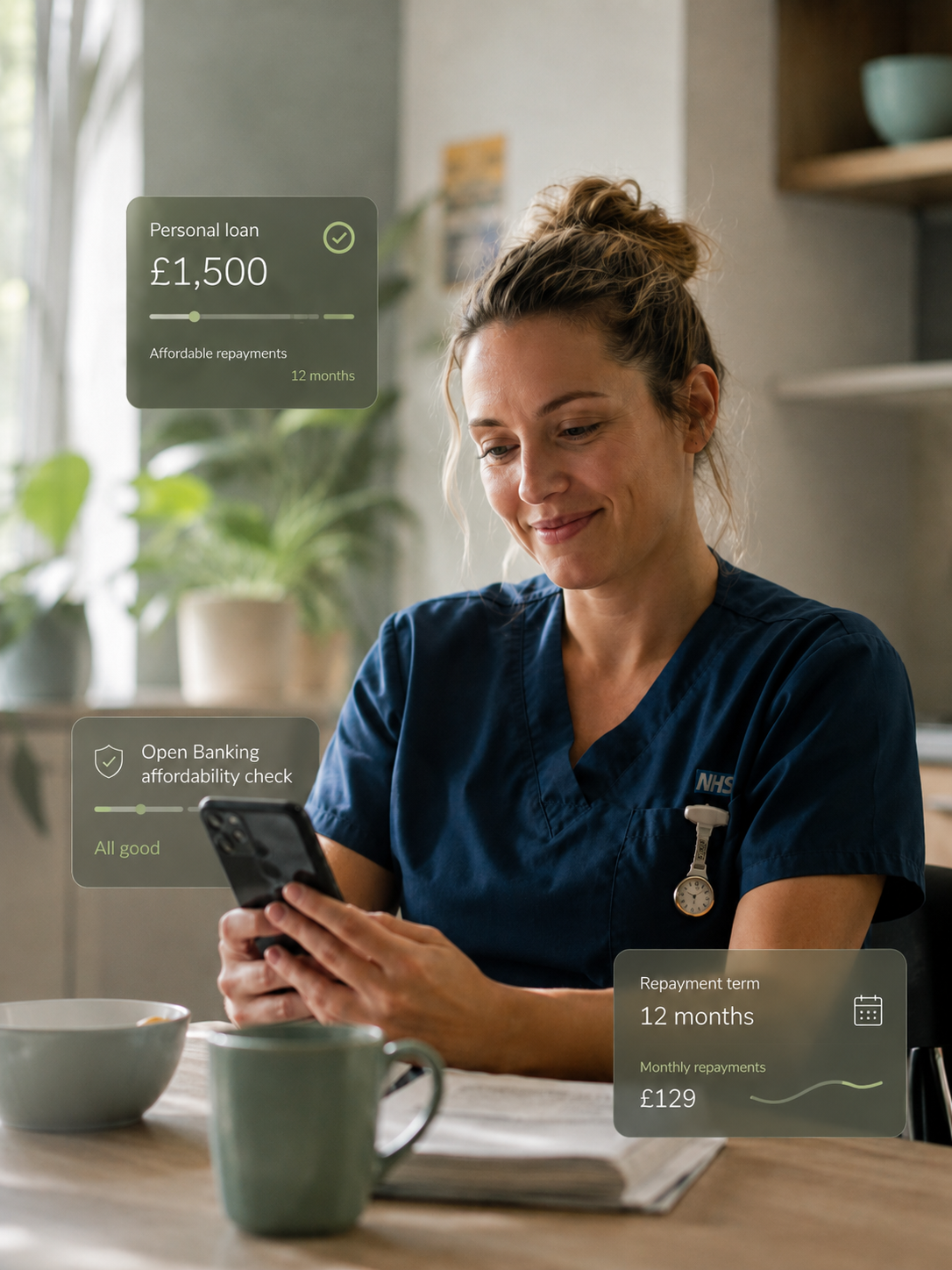
The new facility provided the capital to significantly increase Salad's ability to lend to NHS and public sector workers and demonstrated growing institutional confidence in both the commercial model and the technology behind it.
By this point, around half of Salad's borrowers were lower income households who earned between £12,000 and £24,000. Many had children in their household and had frequently been declined by traditional lenders because of their credit profiles.
You can read more about this announcement here.

2024
Retail investors backed our mission.
In 2024, Salad launched its first retail bond investment through ethical investment platform Ethex, giving individuals the opportunity to invest directly in Salad's growth and help fund more affordable lending.
The IFISA-eligible bond targeted a 9% annual return and formed part of Salad's strategy to diversify the capital supporting its continued expansion.
Demand exceeded expectations, demonstrating that investors as well as customers could see the opportunity in building a fairer credit market.


2026
15,000 five-star reviews - and counting!
By 2026, more than 15,000 customers had left Salad a five-star Trustpilot review.
For us, that matters for more than the number.
Many of the people coming to Salad have previously experienced rejection from mainstream financial services. Building a service that customers trust, whilst lending responsibly has been central to our business from the beginning.
“Thanks again for being there for me when I needed help in sorting out my loan, this time a large vehicle repair bill. It's effortless and they make it so easy with everything you pay up front. Thanks again Salad Money people.“ Verified Trustpilot Review, July 2026.

2026
£300m lent responsibly.
From our first customer to £300 million in lending.
The milestone represents billions of transactions analysed, hundreds of thousands of individual credit decisions made using a deeper understanding of people's real financial circumstances.
It also importantly represents the data, technology, regulatory knowledge and lending experience accumulated along the way.
These capabilities are providing the foundations for what’s coming next.
2017
A different way to think about credit.
Salad was founded in 2017 by long-term consumer campaigner Alan Campbell. The company was initially funded solely through his family office, Alfie Holdings, before later taking on external capital to help the business grow.
Growing up in Govan, Glasgow - a proud working-class community on the south bank of the Clyde with a rich shipbuilding heritage; Alan had seen first-hand what limited access to financial services could mean for individuals and communities. He believed people with limited or imperfect credit histories were being excluded, and there was a significant gap between mainstream lenders and high-cost credit for those who needed access to smaller, fairly priced loans.
Salad was conceived and built differently. With new technology and Open Banking, we asked “can this person afford to repay today?” versus “what does this person's credit score say about their past?”. This unlocked fair and affordable finance for thousands of consumers who had previously been excluded, and it was thanks to Open Banking that this all became possible.

2019-2020
Proving there was another way to offer credit.
What started with one customer began to grow.
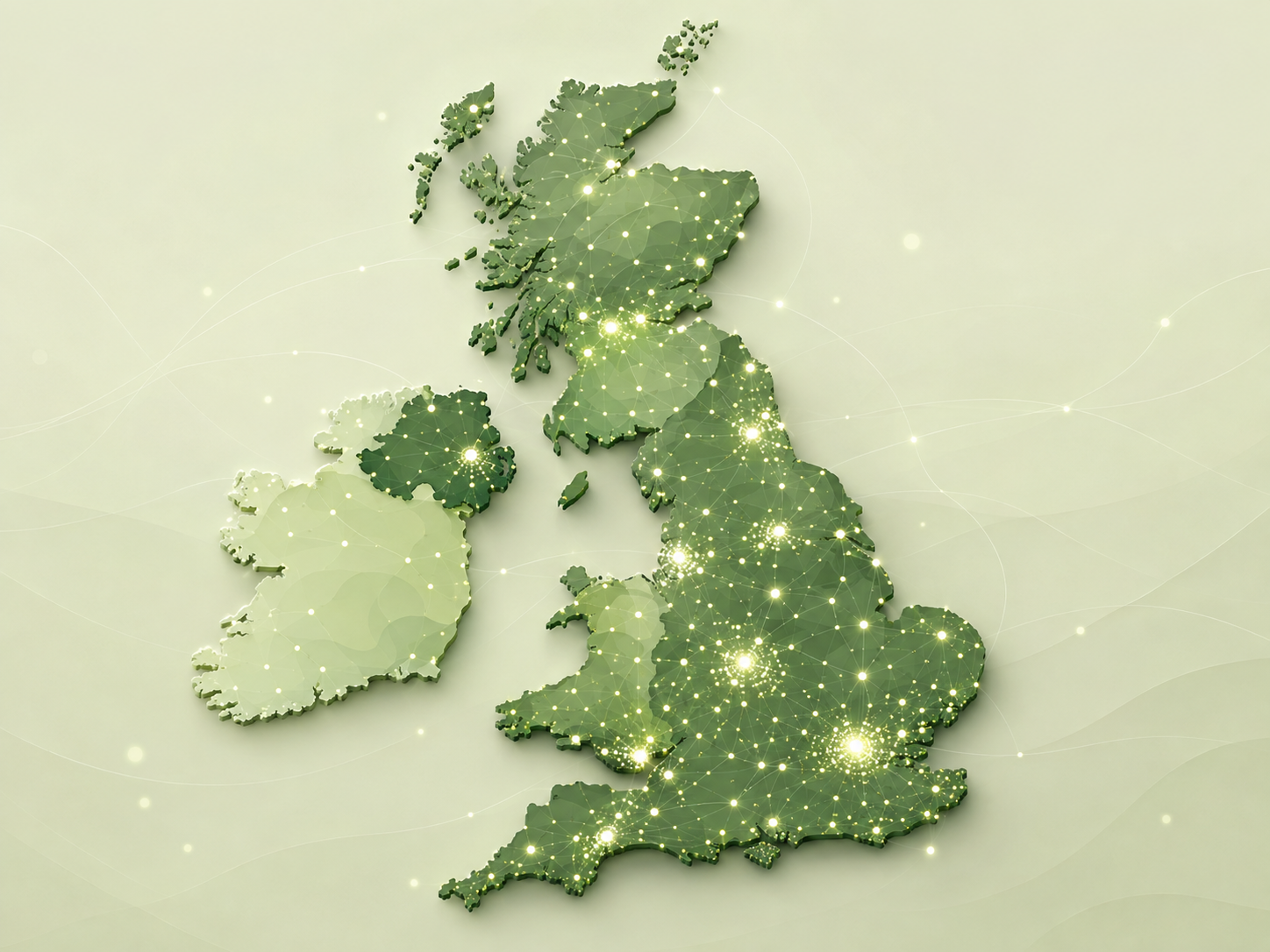
By 2019, Salad had provided more than £500k of low-value personal loans to almost 1,000 customers, with people applying from communities across the UK including places such as Cardiff, Devon, Dumfries and Galloway, Sheffield and Stockport.
The growth demonstrated something important: there was significant demand from people who weren't necessarily unable to afford credit, they were simply poorly served by the way traditional credit decisions were being made.
Every application and repayment also strengthened our understanding of real-world affordability, helping us continually develop our technology using Open Banking data within our credit models to make real-time lending decisions.
2022
Scaling affordable credit for key workers.
A year later, Fair4All Finance provided a further £2 million funding package to help Salad increase access to affordable, small-sum credit for NHS and public sector workers.
By then, Salad's proposition had demonstrated that consumers with imperfect credit histories could be served responsibly using a clearer understanding of affordability.
The additional funding helped meet growing demand from workers who might otherwise have been forced towards much higher-cost alternatives.
Salad was also helping applicants beyond lending. Its benefits calculator had helped almost 32,000 households identify more than £159 million in benefits they could be entitled to each year.

2024
£100m milestone!
What began with a belief that credit decisions could be made differently reached a major landmark when Salad passed £100 million in cumulative lending, helping thousands of public sector and key workers across the UK access an alternative to higher-cost credit.
But growth wasn't just about lending more. Years of Open Banking applications, transactions and repayment outcomes were creating something increasingly valuable: a deep proprietary understanding of affordability and financial behaviour.

2024
Salad secures landmark Open Banking licence.
Salad became the first consumer CDFI lender to be registered by the FCA as an Account Information Services Provider (AISP), enabling direct access to Open Banking data and strengthening the proprietary technology behind its affordability assessments.
You can read more about the news here.
2025
£200m lent!
Just one year after passing £100 million, Salad reached another landmark: £200 million in cumulative lending.
The pace of growth reflected both the scale of unmet demand for affordable credit across the UK, and the strength of an approach built around real affordability and Open Banking data rather than traditional credit scoring alone.

2026
Recognition by the King for innovation in lending.
Salad was awarded the King's Award for Enterprise for Innovation, one of the UK's most prestigious business honours (more here).
The award recognised Salad's innovative use of Open Banking and its proprietary affordability technology to make fairer lending decisions for people who may be underserved by traditional credit assessment.
It marked an important moment in our journey: independent recognition that technology can be used not simply to make financial services faster, but to make them fairer.

What Sets Us Apart
People-First Approach
Everything we build starts with an understanding of people’s real financial lives. Rather than relying solely on traditional credit scores, we use Open Banking data to understand income, expenditure and affordability, helping us make fairer, more responsible decisions.
Our Data
Our decisions are informed by years of real-world Open Banking data and repayment outcomes. We analyse how money moves in and out of customers’ accounts, how spending patterns change over time and what that tells us about affordability - giving us a richer view of financial behaviour than a traditional credit score alone.
Our Social Purpose
Our purpose is built into the way we operate. We create products and technology designed to widen access to fairer financial opportunities, while ensuring affordability and responsible decision-making remain at the heart of every business in the Group.